Telstra mobile reseller ISPOne is embroiled in another legal dispute, this
time with Telstra itself, over claims that the company has not paid its bills.
Telstra is threatening to disconnect prepaid mobile services.
ISPOne, which acts as a wholesale intermediary between Telstra and other
resellers such as Kogan Mobile and Aldi Mobile, has filed an urgent application
in the Federal Court to seek to stop Telstra from terminating the supply of
prepaid mobile services to the 280,000 customers that have active services
through one of ISPOne's customers.
ISPOne has claimed that Telstra has sought to terminate the services due to
a failure to pay invoices, but ISPOne has said that no money is due, because
Telstra is calculating the amount owed based on incorrect pricing of data for
prepaid mobile services.
ISPOne is claiming that Telstra is now in breach of its agreement with
ISPOne, and that it is entitled to damages because of problems with the
wholesale service that Telstra offered, over which ISPOne said it saw a delay in
mobile numbers porting to Telstra.
Telstra said it has yet to change its arrangements with ISPOne.
"ISPOne is a customer of Telstra Wholesale. We have met all our contractual
obligations to them. We can't comment on matters before the court, other than to
say we will exercise all our legal rights in this case. We have not made any
changes to the arrangements with ISPOne at this time," a Telstra spokesperson
said.
Following a hearing in the Federal Court in Victoria this afternoon, the
Telstra spokesperson said that the matter would be decided in the next 24 hours,
with ISPOne to pay into court AU$300,000.
"As the court has heard we are a creditor of ISPOne. Over a period of
several months we have given them every opportunity to develop a repayment plan
for their debt but to date we have been unable to reach a satisfactory
agreement," the spokesperson said.
"We will continue to defend the claims raised by ISPOne at tomorrow's
hearing."
Telstra said it had a contingency plan in place to limit the impact on the
customers using services through one of ISPOne's customers.
The court case against Telstra is the latest in the ongoing problems for
ISPOne in providing Telstra 3G wholesale services. In May, ISPOne was ordered to
pay Kogan Mobile damages for suspending over 700 Kogan Mobile customers who were
flagged by the company to be using too much data.
2013年8月12日星期一

You could possibly make a case that Microsoft must have pursued
It really is no secret that Surface RT and Windows RT, along with Windows
RT on other platforms, did not do also as Microsoft hoped. The newest collateral
harm in that failure was Nvidia's Tegra processors, which run inside the Surface
RT.
Surface/Windows RT had no shortage of skeptics even when it launched, but it is doable things could transform more than time. I am not saying that this *will* take place, but that there's a reasonable scenario for it. Here's how it operates.
Initially, some Microsoft company plan forensics: Microsoft wants developers to write apps for the new, Modern UI (a.k.a. Metro). Releasing Windows eight only for Intel architecture, they ought to have believed, would have made it also simple for developers to bypass Metro due to the fact conventional Windows programs would already run on it (and on Windows 7 along with other versions). But if Surface RT were a results, developers would want to be on it, and would pick to write Metro apps as a way to be on each platforms.
Effectively, that did not work. The truth is, color me shocked at the degree of reticence of developers to create Metro apps, because the sheer quantity of users who can run them will undoubtedly be very huge, even if it is small adequate to become considered a failure for Microsoft. Recall, any other firm in the world would like to have a disaster like Windows Vista, a huge selection of millions of copies of which have been sold. Such could be the worst you may count on from Windows eight.
This vacation season you could expect to determine touch-enabled Windows systems heavily promoted and Microsoft will attempt other promotions to have individuals purchasing apps from the shop. The truth is, the failure to have developers writing apps for the shop may be the single most significant difficulty they have. With very good apps customers will undoubtedly come, and with users excellent apps will come.
And if the apps do come, then the decision to purchase an RT device could develop into considerably far more affordable. There requirements to be a expense benefit compared to x86 since the RT will nevertheless be much less capable, or it will must demonstrate far much better battery life or anything to offer people today a reason to get it, as opposed to an Intel-based method.
Based on the performance and power consumption of the most current chips from NVidia and Intel, all of this is probable. It is also possible that Intel will narrow the price and efficiency consumption gaps, and RT will drop all its raison d'etre.

But if, come holiday time or later, the Windows app choice is respectable and RT systems are less high-priced than Intel-based ones, it may be completely affordable to get a single. If they get inexpensive sufficient, persons may well get casual about obtaining them.
My money's against it, nevertheless it could take place. There have been attempts previously to put Windows on other architectures, however they have all failed since the Intel has generally improved their chip overall performance adequate to produce the cost of incompatibility as well higher relative to the advantages.
You could possibly make a case that Microsoft must have pursued it this way to start with: x86 initially, other architectures after the app industry was solidly established. It appears like which will be the Strategy B for Microsoft and NVidia, and maybe it was built-in from the starting.
Surface/Windows RT had no shortage of skeptics even when it launched, but it is doable things could transform more than time. I am not saying that this *will* take place, but that there's a reasonable scenario for it. Here's how it operates.
Initially, some Microsoft company plan forensics: Microsoft wants developers to write apps for the new, Modern UI (a.k.a. Metro). Releasing Windows eight only for Intel architecture, they ought to have believed, would have made it also simple for developers to bypass Metro due to the fact conventional Windows programs would already run on it (and on Windows 7 along with other versions). But if Surface RT were a results, developers would want to be on it, and would pick to write Metro apps as a way to be on each platforms.
Effectively, that did not work. The truth is, color me shocked at the degree of reticence of developers to create Metro apps, because the sheer quantity of users who can run them will undoubtedly be very huge, even if it is small adequate to become considered a failure for Microsoft. Recall, any other firm in the world would like to have a disaster like Windows Vista, a huge selection of millions of copies of which have been sold. Such could be the worst you may count on from Windows eight.
This vacation season you could expect to determine touch-enabled Windows systems heavily promoted and Microsoft will attempt other promotions to have individuals purchasing apps from the shop. The truth is, the failure to have developers writing apps for the shop may be the single most significant difficulty they have. With very good apps customers will undoubtedly come, and with users excellent apps will come.
And if the apps do come, then the decision to purchase an RT device could develop into considerably far more affordable. There requirements to be a expense benefit compared to x86 since the RT will nevertheless be much less capable, or it will must demonstrate far much better battery life or anything to offer people today a reason to get it, as opposed to an Intel-based method.
Based on the performance and power consumption of the most current chips from NVidia and Intel, all of this is probable. It is also possible that Intel will narrow the price and efficiency consumption gaps, and RT will drop all its raison d'etre.
But if, come holiday time or later, the Windows app choice is respectable and RT systems are less high-priced than Intel-based ones, it may be completely affordable to get a single. If they get inexpensive sufficient, persons may well get casual about obtaining them.
My money's against it, nevertheless it could take place. There have been attempts previously to put Windows on other architectures, however they have all failed since the Intel has generally improved their chip overall performance adequate to produce the cost of incompatibility as well higher relative to the advantages.
You could possibly make a case that Microsoft must have pursued it this way to start with: x86 initially, other architectures after the app industry was solidly established. It appears like which will be the Strategy B for Microsoft and NVidia, and maybe it was built-in from the starting.
2013年7月18日星期四
Apple Said Developing Ad-Skipping as Part of TV Strategy
Apple Inc. (AAPL) is developing ad-skipping technology that would let
owners of its Apple TV set-top box and future television devices watch shows
without commercials, people with knowledge of the matter said.
Apple executives have briefed at least two owners of broadcast TV networks and cable channels, as well as some of the biggest U.S. pay-TV systems, said the people, who asked not to be identified because the talks are private. One proposal is for Apple to reimburse programmers for skipped ads, they said.
The company is seeking to develop TV products with broader appeal than Apple TV, a set-top device purchased by 13 million consumers, Chief Executive Officer Tim Cook said in May at the D: All Things Digital conference. Apple TV is more appropriate for “hobbyists” than mainstream viewers, he said. Apple continues to work on a “grand vision” to update TV-viewing that remains “much like 10 or 20 years ago,” Cook said.
Jessica Lessin, a technology writer, reported on July 15 that Apple was working on the ad-skipping initiative.
With advertising accounting for the largest share of their revenue, commercially supported TV networks have resisted skipping technology.
Dish Network Corp. (DISH) introduced ad-skipping for broadcast network TV shows with its Hopper TV set-top box in March 2012. 21st Century Fox Inc., Comcast Corp. (CMCSA)’s NBCUniversal and CBS Corp. (CBS) sued, claiming the service will destroy free, over-the-air prime-time TV. Dish sued the networks in New York, seeking a court ruling that it isn’t infringing copyrights.
DVR Popularity
Almost three-quarters of consumers in a survey cited the ability to skip commercials as a main reason to use a digital video recorder, Google Inc.’s Motorola Mobility unit said in its annual media engagement barometer released on March 19.
Apple has also been working to license more content for people to watch via Apple TV. In June, it announced deals to offer apps from Time Warner Inc. (TWX)’s HBO and Walt Disney Co. (DIS)’s ESPN to customers who already receive those channels from cable or satellite pay TV services.
The maker of iPhones and iPods is also reaching out to cable services, which buy content from media companies such as Disney. It is nearing a deal with Time Warner Cable Inc. (TWC) that would let subscribers of that cable system watch channels on Apple TV, people have told Bloomberg. The companies plan to announce an agreement within the next few months, those people said earlier.
Web Viewing
While Apple pitched an ad-skipping feature to Time Warner Cable, the New York-based cable operator isn’t interested in the idea, according to a person familiar with the matter.
Accessing content from the Internet on a TV has become common since Apple introduced Apple TV in 2007. According to Leichtman Research Group, 44 percent of U.S. households have a TV set connected to the Internet through a video-game console, Blu-ray player or streaming devices such as Roku Inc. and Apple TV. That’s up from 38 percent a year ago, the researcher said.
More competition is coming. Intel Corp. (INTC), the world’s largest chipmaker, plans to begin selling a set-top box with Web-based pay-TV service by the end of the year.
Google has also held discussions with media companies about licensing content for an Internet TV service, people with knowledge of the matter said yesterday. The news was reported earlier by Dow Jones.
Apple, based in Cupertino, California, was little changed at $430.31 at the close in New York. The stock has fallen 19 percent this year.
Windows says there’s an extremely basic explanation
Tablets depending on Microsoft’s Windows eight and Windows RT operating
systems have struggled to achieve traction so far and Paul Thurrott with the
Supersite for Windows says there’s an extremely basic explanation for this: The
first generation of Windows tablets just isn’t really superior. To become clear,
Thurrott says that there are several touch screen Windows eight PCs and
ultrabooks which can be pretty worthy of users’ time and that shouldn’t be
overlooked. But when it comes to pure tablets, he deems that each and every
single one is “simply to flawed to recommend” to anyone serious about purchasing
one particular.
“Looking around my own workplace, that is what I see,” Thurrott explains. “A Surface RT which is attractive and light and gets fantastic battery life but is worthless and frustrating in use due to its horrible performance. A Surface Pro that may be thick and heavy and gets only four.five hours of battery life whilst offering the weird mixture of a little screen having a pretty higher resolution. A Samsung ATIV Intelligent Computer 500T (Clover Trail based) that will be laughable from a performance point of view if it weren’t for that Surface RT. (Truly, it is nonetheless terrible.) That 700T that will not charge anymore unless I plug the energy cord into the tablet itself … which, wait for it, you can not do whilst the keyboard is connected.”
Of course, the first round of Android-based tablets were similarly lackluster when compared with Apple’s iPad, so it is not as although Windows eight is doomed as a tablet operating technique. It does recommend, on the other hand, that Microsoft and its OEM partners will have to put a good deal of work into adding better functionality and worth to their tablets, similar to how Nokia has tried to produce Windows Phone 8 look far more cutting-edge together with the inclusion of its industry-best 41-megapixel smartphone camera in the Lumia 1020.
Thurrott is optimistic that the next generation of Windows tablets is going to be a major improvement more than the present generation considering the fact that improvements to both hardware and computer software will make the devices additional palatable for customers.
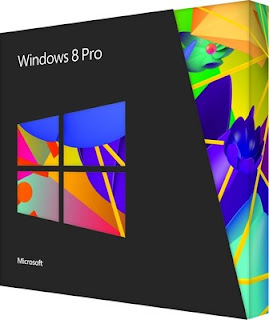
“Things are going to obtain better,” he concludes. “Intel’s new generation Core processors, codenamed Haswell, seem to have solved the battery life issue. And Windows eight.1 seems to solve many from the troubles customers have highlighted in Windows eight, like desktop display scaling. Each of those improvements suggest to me that waiting is in order, as Haswell- and Windows eight.1-based tablets are going to be plentiful in just a couple of months.”
“Looking around my own workplace, that is what I see,” Thurrott explains. “A Surface RT which is attractive and light and gets fantastic battery life but is worthless and frustrating in use due to its horrible performance. A Surface Pro that may be thick and heavy and gets only four.five hours of battery life whilst offering the weird mixture of a little screen having a pretty higher resolution. A Samsung ATIV Intelligent Computer 500T (Clover Trail based) that will be laughable from a performance point of view if it weren’t for that Surface RT. (Truly, it is nonetheless terrible.) That 700T that will not charge anymore unless I plug the energy cord into the tablet itself … which, wait for it, you can not do whilst the keyboard is connected.”
Of course, the first round of Android-based tablets were similarly lackluster when compared with Apple’s iPad, so it is not as although Windows eight is doomed as a tablet operating technique. It does recommend, on the other hand, that Microsoft and its OEM partners will have to put a good deal of work into adding better functionality and worth to their tablets, similar to how Nokia has tried to produce Windows Phone 8 look far more cutting-edge together with the inclusion of its industry-best 41-megapixel smartphone camera in the Lumia 1020.
Thurrott is optimistic that the next generation of Windows tablets is going to be a major improvement more than the present generation considering the fact that improvements to both hardware and computer software will make the devices additional palatable for customers.
“Things are going to obtain better,” he concludes. “Intel’s new generation Core processors, codenamed Haswell, seem to have solved the battery life issue. And Windows eight.1 seems to solve many from the troubles customers have highlighted in Windows eight, like desktop display scaling. Each of those improvements suggest to me that waiting is in order, as Haswell- and Windows eight.1-based tablets are going to be plentiful in just a couple of months.”
2013年7月7日星期日
iPhone 6 and iPhone 5S rumors: sizes, colors, cheaper plastic option
The picture for the iPhone 6, iPhone 5S, or whatever Apple decides to call
the seventh generation iPhone is becoming more clear thanks to an increasing
array of rumors which overlap each other and are evolving to create a basis of
legitimacy. Whether the new device keeps the styling of the iPhone 5 and becomes
the iPhone 5S, or moves to a new cosmetic styling and becomes the iPhone 6, is
still anyone’s best guess. But regardless of body style, the new iPhone will
come in more colors, multiple options, and in some parts of the world will come
in a cheap plastic housing instead of its signature bulletproof glass and
metal.
The screen size and color changes, despite not adding much to the iPhone 6 or iPhone 5S experience for most users, will drive sales significantly if consumer sentiment is any indication. Most people who buy an Android phone over an iPhone claim that “choice” as the determining factor in their buying decision, but then proceed to nearly all purchase the same specific Galaxy model from the same specific vendor. But with Apple offering the iPhone 6 in colors which go beyond black and white, and impractical screen sizes above four inches, those same consumers will view Apple as offering “more choice” even as most of them continue to buy the black four inch model of the new iPhone 6. Consumers, it seems don’t want to make individual choices. They merely want to be able have the option and then not exercise it.
It’s a game Apple will have to learn how to play, pointless as it may be, if it wants the iPhone 5S or iPhone 6 to retain the world’s #1 selling smartphone mantle which the iPhone 5 currently holds.Speaking of world sales, the iPhone 6 (or something lesser than the iPhone 6) is rumored to be offered in a low cost model that’s made from the same cheap plastic as the Galaxy. The reason: in the U.S., carriers will sell the iPhone 6 for about two hundred dollars thanks to contract subsidies. But in other nations where contracts and subsidized pricing don’t exist, Apple must sell the iPhone for its full retail price. By making a cheaper iPhone alternative for those nations, Apple has a better shot at competing there. It’s not clear whether the “cheap iPhone” will also be sold as a free-with-contract model in the U.S. alongside the iPhone 6, or will be strictly an overseas affair.
This security evaluate was released weeks once the services
Evernote today produced an update for its Home windows Contact software
that provides a redesigned hub website page, assistance for its Business
merchandise, and two-step verification to its consumers. Even though a transfer
that may appear to be slight, the corporate phone calls them important that will
help build the “best-looking, native experience” on Home windows equipment.
For anyone buyers accessing Evernote on the Home windows Floor, mobile phone, or pill machine, a brand new start display screen is going to be displayed. The corporation suggests that it has positioned all of its core navigation things and account material that a user could possibly want proper on a solitary display screen.

The screen has now been sorted into multiple sections, like “create”, which must quickly permit you to develop notes, snapshots, or start off that has a file attachment. Other sections on the screen include things like shortcuts, your latest action, as well as a listing of your notes, notebooks, and tags.
Realistically, that is extra of an aesthetic adjust if just about anything. None of these functions are brand-new.
Evernote Business is now supported about the Windows Touch app, bringing it to par with its Android and iOS counterparts. Now, Evernote states end users can integrate with their company’s Company Library with the Get Far more section. Within the notebook part about the hub webpage, customers will see not simply their personalized contents, and also office 2010 professional retail these for their company.
And lastly, to ensure that person information is properly shielded, Evernote is applying two-step verification. This security evaluate was released weeks once the services endured an unauthorized breach in March, which resulted during the corporation resetting its fifty million-plus users’ passwords. In May possibly, Evernote said that two-step verification might be in the beginning available for its premium and Business enterprise people. So even though Home windows Contact application customers have that attribute, you could not be essentially in a position to employ it.
Two-step verification provides a further security stage to logging in to an Evernote account, and ensures that the person logging into Evernote may be the rightful owner of that particular account. The login course of action with two-step verification enabled needs a username, password and one of a kind code which is sent to the user’s cellular telephone, produced because of the Google Authenticator app or printed out via the user in advance.
For anyone buyers accessing Evernote on the Home windows Floor, mobile phone, or pill machine, a brand new start display screen is going to be displayed. The corporation suggests that it has positioned all of its core navigation things and account material that a user could possibly want proper on a solitary display screen.
The screen has now been sorted into multiple sections, like “create”, which must quickly permit you to develop notes, snapshots, or start off that has a file attachment. Other sections on the screen include things like shortcuts, your latest action, as well as a listing of your notes, notebooks, and tags.
Realistically, that is extra of an aesthetic adjust if just about anything. None of these functions are brand-new.
Evernote Business is now supported about the Windows Touch app, bringing it to par with its Android and iOS counterparts. Now, Evernote states end users can integrate with their company’s Company Library with the Get Far more section. Within the notebook part about the hub webpage, customers will see not simply their personalized contents, and also office 2010 professional retail these for their company.
And lastly, to ensure that person information is properly shielded, Evernote is applying two-step verification. This security evaluate was released weeks once the services endured an unauthorized breach in March, which resulted during the corporation resetting its fifty million-plus users’ passwords. In May possibly, Evernote said that two-step verification might be in the beginning available for its premium and Business enterprise people. So even though Home windows Contact application customers have that attribute, you could not be essentially in a position to employ it.
Two-step verification provides a further security stage to logging in to an Evernote account, and ensures that the person logging into Evernote may be the rightful owner of that particular account. The login course of action with two-step verification enabled needs a username, password and one of a kind code which is sent to the user’s cellular telephone, produced because of the Google Authenticator app or printed out via the user in advance.
2013年6月13日星期四
Xbox One price and release date both blow up in Microsoft’s face
E3 should have been a coronation for the Xbox One. Microsoft got its new
gaming console unveiled before Sony, with well received specs, great looking
games, and a new set of internet living room features might even work this time.
The only two pieces missing from the Xbox One puzzle were its price and release
date, both of which were expected to be formalities. The $499 price being thrown
around by those in the know sounded high, but no higher than anyone was
expecting from the competition. And as long as it shipped before the holidays,
the precise date didn’t matter. But then E3 came and bombs started dropping on
Microsoft’s head.
Microsoft confidently unveiled the price tag of the Xbox One at the E3 gaming conference this week, $499 just as expected, but Sony announced that its PlayStation 4 would cost only $399. Boom. Then Microsoft said that it expects the Xbox One release date to be November. No one in the tech industry ever hits release dates on time when they’re still this far out. Especially Microsoft. So now there’s the good chance that the new Xbox will hit the market too late into the holiday season to have a full impact, or arrive with too little available inventory, or miss the holiday season entirely. Boom again. And that’s before the ongoing tick-tick-tick of Microsoft’s unpopular built-in DRM for Xbox One gaming discs got blown up by Sony’s revelation that PS4 games will be free of DRM entirely.
Now the Xbox One launch at E3 has shifted from a coronation to a condemnation. Gamers have stopped talking about how cool the new Xbox One games look, or caring about the feature set. Instead they’re whining about how the price is too high, game ownership is too restricted, and wondering if they should buy a PS4 instead because the new Xbox may not arrive this year anyway. Microsoft has a good deal of time to turn around the narrative, but suddenly it’s playing from behind.
订阅:
博文 (Atom)